Twiggy at 76: The Iconic Model Reflects on the Haircut That Changed Everything
Few faces define an era quite like Twiggy’s. The subject of The Iconic Model Reflects touches on deeply personal matters. With her wide blue eyes, delicate frame, and razor-sharp pixie crop, she became the visual embodiment of the Swinging Sixties. Now in her late seventies, the British model continues to captivate audiences, though she recently admitted that one of the most famous hairstyles in fashion history was never actually her idea.
Born Lesley Hornby in London, Twiggy transformed the modeling industry at a time when the profession favored taller, more statuesque figures. Standing at just five feet six inches, she was repeatedly told she lacked the height to make it in high fashion. Yet within months of her first major exposure, she had become one of the most photographed women in the world.
A Reluctant Style Icon
Twiggy recently appeared as a guest on the podcast “Table Manners,” hosted by Jessie Ware, where she opened up about the circumstances that led to her signature look. Contrary to popular belief, the androgynous crop that defined her image was not something she had dreamed of wearing. In fact, she had been growing her hair longer when fate intervened at a high-end London salon.
During her visit to the House of Leonard in Mayfair, she caught the attention of the renowned stylist Leonard Lewis, professionally known as Leonard of Mayfair. Lewis was searching for models willing to try his experimental new crop haircut, and he saw potential in the young woman sitting before him.
“I went in to have it shampooed and set and Leonard saw me, and he said, ‘Let me do my new haircut on you,'” Twiggy recalled during the podcast. She admitted that she hesitated internally, having been growing her hair out, but found herself unable to decline in such an upscale establishment.
“I was in this very posh salon in Mayfair so I was a bit too shy to say I don’t want it done, and I kind of nodded,” she explained.
The Seven-Hour Transformation
The following day, Twiggy returned to the salon and took her seat in Lewis’s chair. What followed was an extensive styling session that lasted an entire day. The process involved cutting, coloring, and recutting her golden blonde hair until the stylist achieved the precise shape he envisioned.
“I went back the next day and I was in there for seven hours, where he cut it and then I went out and had it colored and then re-cut. Oh, it was mad,” she said with a laugh.
Although the final result was not the look she had originally wanted, Twiggy quickly recognized the skill and artistry behind Lewis’s work. The stylist had earned considerable notoriety in London’s fashion scene, and his new creation would soon become one of the most imitated hairstyles in the world.
The Photograph That Launched a Career
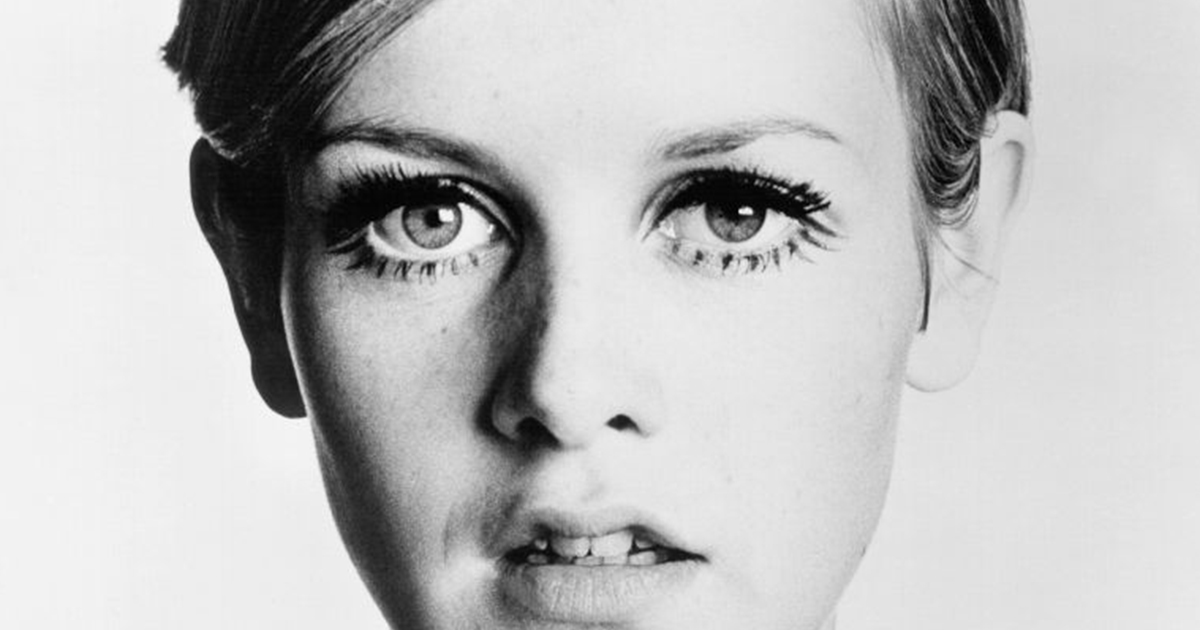
Once the crop was perfected, Lewis arranged for British photographer Barry Lategan to capture Twiggy’s image. The resulting photographs were striking, emphasizing her enormous blue eyes and the sculptural quality of the short haircut. Lewis displayed the pictures in his salon, where they caught the attention of a journalist who happened to be visiting.
That journalist was Deirdre McSharry, the fashion editor of the Daily Express. She was having her own hair styled by Lewis when she spotted the photographs of Twiggy. Recognizing something extraordinary in the young model’s image, McSharry helped bring the pictures to a wider audience.
“That’s how it all happened…When that haircut started, when that photograph was taken, that was the pivotal moment,” Twiggy said.
The pixie cut drew immediate attention to her eyes, which she further emphasized by applying mascara to her lower lashes. This distinctive eye makeup became as iconic as the haircut itself.
The Story Behind the Doe Eyes
In a separate conversation with Vogue, Twiggy explained the origins of her famous doe-eyed look. As a teenager, she spent hours experimenting with cosmetics at home, drawing inspiration from an unexpected source.
“I had a rag doll that had those spikey eyelashes, so I bought false eyelashes for myself and created what became known as my sort of ‘look,'” she said.
Her makeup experimentation was partly an act of rebellion. Twiggy attended a strict grammar school where uniforms were mandatory and cosmetics were forbidden. On weekends, she would gather with friends to play with makeup, just like countless other teenage girls of her generation.
“We wore uniforms and makeup was not allowed. So, on the weekends, me and my friends would sit like most teenage girls and play with makeup,” she explained. “And that’s how that makeup evolved.”
Those weekend sessions eventually produced a signature style that would be copied by women around the globe.
From Newspaper Pages to Fashion Stardom
Just a few weeks after the initial photo session, the Daily Express published several of Lategan’s black and white images alongside the headline “Twiggy–The Face Of ’66.” The feature launched her career almost overnight.
The very next month, she completed her first shoot for Vogue magazine, and her life changed dramatically. “My life became a whirlwind,” she later reflected.
Still in her teens, Twiggy became the definitive model of the mod fashion movement. Her influence extended beyond magazine covers when Mattel used her as the blueprint for a Twiggy Barbie doll, making her the first celebrity to receive such an honor.
Her name became closely associated with British designer Mary Quant, who was simultaneously revolutionizing women’s fashion with shorter hemlines and more liberating clothing designs. Together, they represented a new era of youthful style and freedom.
A Career Beyond Modeling
After just a few years at the top of the modeling world, Twiggy retired from the profession in 1970. She then pursued a diverse career that included acting on stage and screen, as well as singing.
Her film credits include a starring role in the 1971 musical “The Boy Friend,” a performance that earned her two Golden Globe awards. She also appeared in “Club Paradise” in 1986, starring alongside the late Robin Williams.
Twiggy later served as a judge on “America’s Next Top Model” and developed a fashion line exclusively for Marks & Spencer, appearing in numerous billboard advertisements for the brand.
In 2011, she released the album “Romantically Yours,” featuring cover versions of classic songs including “Blue Moon,” “They Can’t Take That Away from Me,” and “Right Here Waiting.” Her daughter, Carly Lawson, contributed guest vocals to several tracks.
Still in the Spotlight
Even in her seventies, Twiggy remains active in the fashion world. She has served as an ambassador for L’Oreal and continues to collaborate with various brands as a designer.
More recently, she launched her own podcast called “Tea with Twiggy,” where she engages in intimate conversations with famous friends each week. The show allows her to connect with audiences in a more personal format than traditional media appearances.
The Iconic Model Reflects: Family First
Despite her remarkable career achievements, Twiggy maintains that her greatest success lies in her relationship with her daughter. Carly was born in 1978, and her father, actor Michael Witney, passed away at the age of 52 when Carly was just five years old.
Twiggy raised Carly with her second husband, actor Leigh Lawson, whom she married in 1988. Throughout her career, she prioritized her role as a mother above all else.
“My number one is family. It always has been, even when Carly was little. If it didn’t work for Carly, I didn’t do it,” Twiggy said. “We went everywhere together but that’s why we’re so close now.”
She recalled a recent conversation with her daughter that highlighted their enduring bond. “The other day, she was saying, ‘I can’t remember a time when you weren’t there, Mum’ and it’s because I was always there. Even when I travelled, she came with me.”
Now a grandmother as well, Twiggy continues to inspire admiration for her ability to carry off the iconic pixie cut that she initially never wanted. Decades later, she remains as striking as ever, a testament to the timeless quality of her look and the lasting impact of that fateful salon appointment in 1966.
