The Photographer Behind the Iconic Image of a Trapped Girl in Colombia’s Volcanic Mudflow Addresses the Question That Still Haunts the World
The topic of The Photographer Behind raises many questions. In November 1985, a catastrophic natural event forever changed the landscape of Colombia and left a deep scar on the global conscience. The eruption of the Nevado del Ruiz volcano triggered a massive mudflow that obliterated the town of Armero, leaving behind a scene of utter destruction. The disaster claimed the lives of more than 25,000 people, marking it as one of the most lethal volcanic events in recorded history.
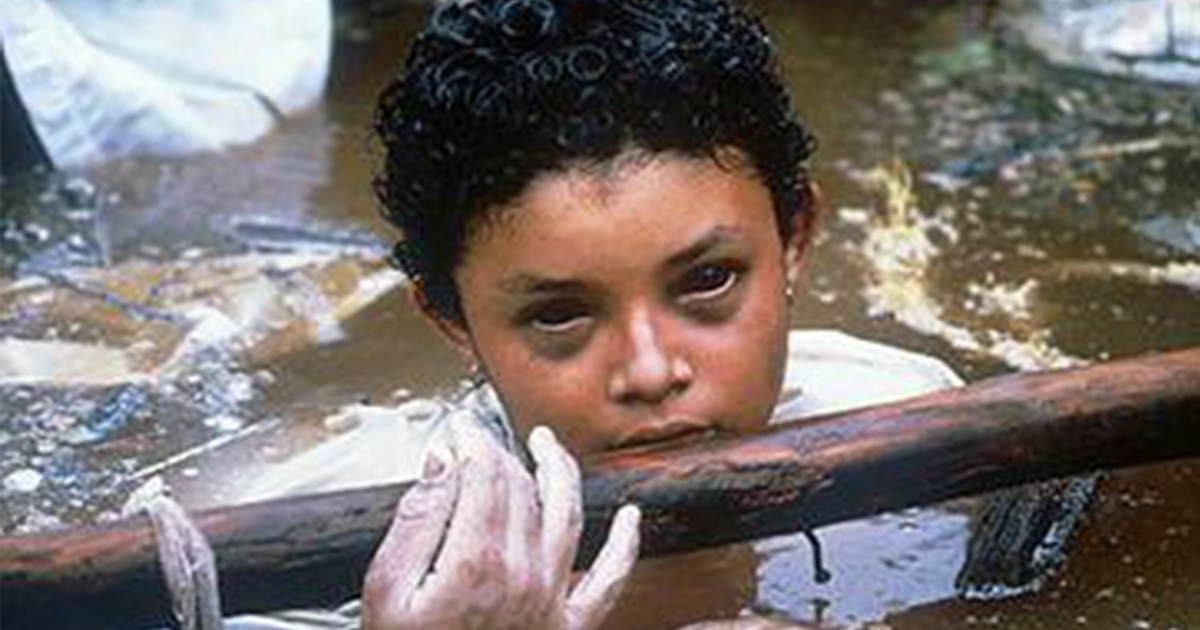
In the midst of this devastation, one image emerged that captured the world’s attention and symbolized the profound human cost of the tragedy. It was the haunting portrait of a young girl named Omayra Sánchez, trapped and fighting for her life in the debris-filled sludge. The photograph, taken by French photojournalist Frank Fournier, became a defining visual of human suffering and resilience. It earned the World Press Photo of the Year award in 1986 and continues to be referenced as a powerful example of conflict and disaster journalism.
Decades later, a persistent question remains in the minds of many who have seen the image: Why did the photographer not intervene to save her? This article explores the circumstances surrounding the photograph, the events of the disaster, and the difficult decisions faced by those who witnessed the tragedy firsthand.
The Armero Disaster: A Sequence of Unheeded Warnings
To understand the full context of the photograph, it is essential to examine the events that led to the Armero tragedy. The Nevado del Ruiz stratovolcano, which had been dormant for 69 years, erupted violently on November 13, 1985. The eruption was not entirely unexpected, as scientists and local observers had noted signs of increased activity in the months leading up to the event.
Historical records show that the volcano had erupted in 1595 and again in 1845. On both occasions, the resulting avalanches traveled down the Lagunilla River valley, the same area where the town of Armero was later established. This historical precedent made the region particularly vulnerable to the dangers posed by the volcano.
In the months before the 1985 eruption, experts detected rising volcanic activity and communicated their concerns to Colombian authorities. Researchers and climbers reported unusual phenomena, including the discovery of dead fish in local water basins and the presence of high sulfur levels. Minor explosions also sparked a forest fire in the area, adding to the growing evidence of an imminent threat.
Despite these clear indicators, no official evacuation order was issued. The warnings were largely disregarded, leaving the population of Armero exposed to the volcano’s fury. When the eruption finally occurred, it unleashed pyroclastic flows that rapidly melted the glaciers capping the volcano’s peak. This melting produced four massive lahars—fast-moving mixtures of mud, water, and debris—that raced down the mountainside at speeds reaching 50 kilometers per hour.
The lahars traveled through gullies and channels, gaining volume and speed as they descended toward the valley below. When they reached Armero, the mudflows engulfed the town with little warning, trapping thousands of residents in their homes and streets. The sheer force of the flow destroyed buildings, uprooted trees, and left the town buried under meters of thick, heavy mud.
The Devastating Toll on Armero and Its People
The scale of the destruction was staggering. Colombian sources estimate that approximately 23,000 people lost their lives in the eruption, representing nearly 94 percent of Armero’s population. The eruption sent a column of smoke and ash more than 15 kilometers into the atmosphere, which had a significant impact on the regional climate and left the area in a state of ruin.
Neighborhoods were completely leveled, and the physical damage was extensive. Official reports indicate that 5,092 homes were destroyed, with 4,718 of those located in Armero alone. The disaster affected an estimated 230,000 people, and the economic losses were calculated at between 35 and 50 billion Colombian pesos, equivalent to roughly $7.5 million to $10.5 million in U.S. dollars at the time.
In the immediate aftermath, rescue efforts were launched to find survivors amid the wreckage. The scene was chaotic, with hundreds of people trapped in the mud and debris. Rescue workers faced immense challenges as they navigated the treacherous terrain and worked to free those who were still alive. It was in this environment of desperation and urgency that the story of Omayra Sánchez unfolded.
The Story of Omayra Sánchez Garzón
Omayra Sánchez Garzón was born on August 28, 1972, in Armero. She was the daughter of Álvaro Enrique Sánchez, a collector of rice and sorghum, and María Aleida Garzón, a nurse. She lived with her parents, her brother Álvaro Enrique, and her aunt María Adela Garzón in the town that would become the epicenter of the disaster.
On the night of the eruption, Omayra and her family were awake, concerned about the ash falling from the erupting volcano. As they watched the unfolding events, they heard the terrifying sound of the approaching lahar. When the mudflow struck, Omayra became trapped beneath the wreckage of her home. Concrete and other debris pinned her down, making it impossible for her to free herself.
When rescue workers reached her, they found her legs trapped under the rubble. Her aunt’s lifeless body was still holding onto her, a tragic detail that added to the emotional weight of the scene. The rescuers attempted to pull her free but quickly realized that any movement could cause further injury. Her legs were so securely trapped that they placed a tire around her body to help keep her afloat as the water level around her began to rise.
A Courageous Fight for Survival
Despite the dire circumstances, Omayra remained remarkably composed. She spoke with volunteers and journalists, asked for sweet foods, and even sang songs as the hours passed. She agreed to be interviewed, showing a level of maturity and bravery that moved those around her. However, as time went on, the physical and emotional toll became increasingly evident.
Doctors on the scene determined that the only way to free Omayra was to amputate both of her legs at the knees. However, the necessary surgical equipment was not available at the site. Without the ability to perform the procedure, the medical team was left with no viable option to save her. They were forced to make the heartbreaking decision to allow her to pass away peacefully rather than cause her additional suffering through futile attempts to free her.
Over the course of more than 60 hours, Omayra remained submerged in the water, her body gradually giving way to the elements. She began to hallucinate, speaking about school and a math exam she believed she had missed. Her hands swelled, and her face became reddened as the water continued to rise. Despite her deteriorating condition, she held on to life with remarkable determination.
At one point, she uttered the words, “I don’t feel my body anymore,” a heartbreaking admission that reflected the severity of her condition. Her bravery in the face of such overwhelming adversity left a lasting impression on everyone who witnessed her struggle.
The Photograph That Shook the World
It was during these final hours that Frank Fournier arrived at the scene. He had flown into Bogotá shortly after the eruption and made his way to Armero, where he was struck by the eerie silence that hung over the devastated area. He later described the experience, recalling the sounds of people screaming for help followed by an unsettling quiet. The atmosphere was deeply haunting, and the scale of the suffering was overwhelming.
A farmer guided Fournier to where Omayra was trapped. Her body was showing signs of swelling, a clear indication that her condition was worsening. Moved by her quiet courage and the agony she was enduring, Fournier took a photograph. The image captured a moment of profound vulnerability—a young girl facing death with a mixture of strength and despair. It was a picture that would resonate with people around the world and become a symbol of the disaster’s human cost.
Fournier later spoke about the impact of the image, noting that Omayra was facing death with courage and dignity. The photograph, titled “The Agony of Omayra Sánchez,” was published widely and drew international attention to the tragedy. It sparked debates about the ethics of photojournalism and the role of the media in documenting human suffering.
Omayra’s Final Words and the Aftermath
On the morning of November 16, 1985, at 9:45 AM, Omayra Sánchez took her last breath. Just two hours before her death, a rescuer had tried to reassure her, telling her that she would be freed soon and would live for many years. At that point, the water had risen to her neck, and coffee beans were tangled in her hair. Witnesses captured her final words on film, as she softly expressed her love for her mother, father, and brother.
Omayra’s brother survived the lahars, but her father and aunt did not. Her mother, María Aleida, had been away in Bogotá on a business trip at the time of the eruption and survived. In the aftermath, Aleida spoke about the tragedy, acknowledging the horror of the loss while emphasizing the need to focus on the living, including herself and her 12-year-old son, who had lost a finger during the disaster.
Why the Photographer Did Not Intervene
The publication of Fournier’s photograph ignited a firestorm of controversy. Many observers were horrified by the intimate nature of the image, feeling that they had witnessed the final moments of a young girl’s life. Critics accused Fournier of exploiting Omayra’s suffering and questioned why he did not attempt to rescue her. The backlash was intense, with television debates examining whether photojournalists were acting as vultures in such situations.
Fournier defended his decision, explaining that rescue was simply not possible given the circumstances. He emphasized that the photograph served a greater purpose by raising crucial funds for the victims and highlighting the irresponsibility of the country’s leadership in failing to act on the warnings. He expressed relief at the public reaction, noting that it would have been worse if no one had cared at all. He believed the story needed to be told, and the image played a significant role in bringing the tragedy to the world’s attention.
The Photographer Behind: Legacy and Remembrance
The impact of Omayra Sánchez’s story extended far beyond the immediate aftermath of the disaster. A family friend, Manuel Martín Benitos, established the International Foundation Omayra Sánchez in 1986. The foundation’s mission was to create a global network of teams dedicated to preventing similar disasters and supporting victims of catastrophic events.
In the years that followed, Sánchez has been remembered in various ways. Publications like El Tiempo have featured her story, and her memory has inspired poems, novels, and music. A species of cricket found in the region was named Gigagryllus omayrae in her honor, ensuring that her legacy endures in both human and natural history.
The Colombian government also took steps to prevent future tragedies by creating the National Office for Disaster Preparedness, now known as the Directorate for Disaster Prevention and Preparedness. All cities in Colombia were instructed to develop disaster preparedness plans as part of these efforts.
Although the Nevado del Ruiz volcano remains active, the town of Armero no longer exists. The site now serves as a memorial, marked by Christian crosses and a small monument dedicated to Sánchez’s memory. Her face, her words, and her courage, which were broadcast around the world, remain a testament of accusation against those who could have lessened the severity of the tragedy.
Omayra’s name has lived on in the hearts of those who witnessed her suffering. She represents the innocence lost in a moment of incomprehensible disaster, and her story serves as a haunting reminder of the fragility of life and the importance of heeding warnings. For those who saw her final hours, her memory is one that should never be forgotten.
