Elvis Presley’s Movie Debut: The Surprising Behind-the-Scenes Secrets of Love Me Tender
Elvis Presley’s transition from music icon to movie star was a pivotal moment in entertainment history. His first film, a Western drama set during the Civil War era, captured the hearts of millions and showcased a different side of the legendary performer. While the movie is celebrated for its romance and musical numbers, a closer look reveals a treasure trove of fascinating details that often go unnoticed by casual viewers.
The film, which hit theaters in 1956, combined the King of Rock ‘n’ Roll’s natural charisma with a classic American historical backdrop. It was a unique blend that had never been attempted before, and it set the stage for a successful acting career that would span over two decades. The excitement surrounding its release was unprecedented, with fans eager to see their idol in a completely new light.
A Historic Premiere That Broke Records
The anticipation for the movie’s release was palpable, particularly in New York City. When the film premiered at the iconic Paramount Theater, the scene outside was nothing short of chaotic. A massive crowd of devoted admirers, numbering around 1,500, chose to spend the night on the sidewalk beneath a towering 40-foot promotional display of the singer. Their dedication was a clear sign of the cultural phenomenon he had become.
Inside the theater, the atmosphere was electric. The audience’s enthusiasm was so overwhelming that their constant cheering frequently drowned out the dialogue on screen. This level of fan devotion was a testament to the unparalleled star power that Presley wielded at the height of his early fame. It was an event that demonstrated the deep connection he had forged with his audience, a bond that would only grow stronger with time.
The Original Title and Historical Inspiration
One of the most surprising facts about the film is that its title was not the original choice. The production was initially named after the main character’s family, but the name was changed to align with the title song that was sweeping the nation. This marketing strategy proved to be incredibly effective, as the song’s popularity helped drive audiences to theaters.
The storyline itself draws loose inspiration from a real-life group of criminals active in the 1860s. This gang, operating out of Indiana, earned a notorious reputation for their bold heists. They are historically recognized as pioneers in the realm of train robbery, a claim that adds a layer of authenticity to the fictional narrative. Led by a group of brothers, their reign of terror was eventually ended by vigilante action, a dramatic conclusion that mirrors the film’s tense plot.
An Unconventional Path to Stardom
Before achieving global fame, Presley had a humble job as a cinema usher. This position allowed him to immerse himself in the world of Hollywood, watching the performances of his idols on the silver screen. He harbored a deep ambition to become a serious actor, not just a singer. However, his manager had a different vision, one that involved intertwining his musical releases with his film projects to maximize commercial success.
Despite his aspirations, the role he landed was not the leading part he might have hoped for. The character was initially offered to more established actors who turned it down due to its limited scope. This twist of fate opened the door for Presley to make his debut, even if it meant he was not the top-billed star. In fact, this remains the only film in his career where he received third billing, a fact that is surprising given his immense popularity at the time.
Dedication to the Craft
Even though the part was smaller, the singer approached his work with remarkable seriousness. He arrived on set fully prepared, having memorized not only his own lines but also those of his fellow actors. This level of dedication impressed the production team and hinted at his potential as a performer. He was known to be humble and polite, yet intensely focused on delivering a convincing performance.
The filming process was swift, with all of his scenes and musical recordings completed in just over a month. This efficiency was a testament to his work ethic and natural talent. Despite the challenges of the role, including some physically demanding scenes, he remained committed to proving himself as more than just a musical act. His performance was so well-received that additional scenes were written specifically for his character, expanding a part that was originally meant to be quite minor.
Anachronisms and On-Set Mistakes
For keen-eyed viewers, the film is filled with subtle errors that have become a point of fascination over the years. One notable mistake involves a continuity issue with a weapon. In a tense standoff, a character’s gun appears and disappears from its hiding spot between camera cuts, creating a humorous inconsistency.
Another glaring error is the appearance of a modern zipper on a pair of pants in a scene set in the 1860s. This historical inaccuracy is a classic example of a period film oversight. Even more obvious is a parked automobile visible in the background of a scene, a clear anachronism that transports the viewer momentarily out of the Civil War setting. These bloopers, while technically mistakes, have added to the film’s charm and enduring appeal for fans who enjoy spotting them.
The Accidental Songwriting Credit and a Timeless Hit
Presley received a co-writing credit for the film’s songs, but the reality of his contribution was quite different. He later admitted, with a sense of humor, that his input on the title track was minimal, limited to just a single line. The credit was more a matter of royalty distribution than creative writing.
The film’s signature tune was not an original composition. Its melody was borrowed from a popular ballad from the 1860s, which was reworked with new lyrics. The song was performed on a popular television variety show weeks before the movie’s release, generating massive demand. The response was so great that the record company received over a million pre-orders, securing gold status before the single was even available in stores. It topped the music charts for five weeks and remained a staple of the singer’s live performances for the rest of his life.
Elvis Presley: A Co-Star’s Enduring Influence
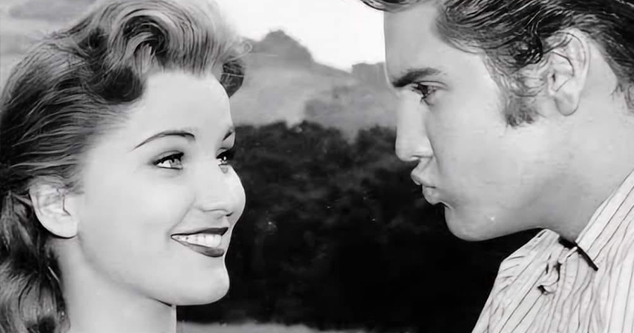
The film’s leading lady was a rising star who was widely regarded as one of the most beautiful actresses of her generation. The singer was reportedly captivated by her, and their on-screen chemistry was palpable. He was so taken with her that he even visited her family home, where he was welcomed as a member of the household.
While she viewed their relationship as a childlike friendship, he had more serious intentions. He proposed marriage, but her parents objected to her marrying at such a young age. She ultimately declined his proposal, as she had already fallen for another prominent figure in the entertainment industry. The actress’s influence, however, did not end with the film’s production. Years later, the woman who would become the singer’s wife reportedly adopted a hairstyle inspired by the actress to catch his attention, a fact that highlights the lasting impact of this collaboration.
The ending of the film was originally a tragic one, which upset many fans and the singer’s own mother. In response, the producers added a special sequence over the closing credits to soften the blow. This addition, while popular, created a final continuity error, as the singer’s hair color had changed from a lighter shade to black by the time the extra footage was shot. These imperfections, combined with the film’s historical liberties and the raw talent of its star, have cemented its place as a beloved classic in cinema history.
