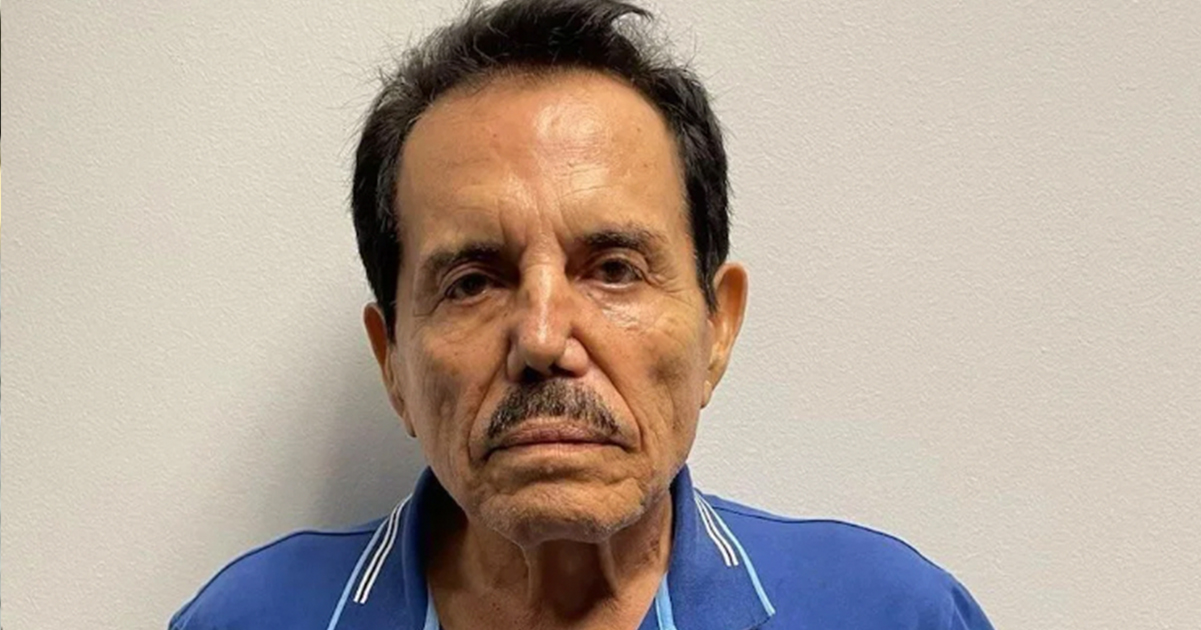
Co-Founder of Sinaloa Cartel Sentenced to Life for Decades of Drug Trafficking and Violence
One of the most powerful figures in modern drug trafficking history has received a final judgment. The subject of Sinaloa Cartel Sentenced touches on deeply personal matters. A federal court has sentenced the co-founder of the Sinaloa Cartel to life in prison, concluding a criminal enterprise that authorities say spanned nearly four decades and left a trail of addiction and bloodshed across multiple nations.
The sentence brings closure to a long-running investigation into an organization that flooded American streets with narcotics while employing extreme violence to maintain its operations. The ruling marks the end of a chapter for a man who prosecutors say operated from the shadows while building one of the most lucrative illegal businesses in the world.
Life Behind Bars for Notorious Cartel Leader
Ismael “El Mayo” Zambada Garcia, now 76 years old, has been sentenced to life in federal prison. The punishment follows his conviction on charges related to the trafficking of massive quantities of illegal drugs into the United States and other countries.
Prosecutors described Zambada as a central figure in a criminal organization that was responsible for distributing approximately 1.5 million kilograms of cocaine, fentanyl, and methamphetamine over the course of its operation. The scale of the trafficking operation made it one of the most significant drug enterprises in modern history.
The sentencing hearing brought an end to a case that federal authorities had pursued for years. Officials involved in the prosecution emphasized that the punishment reflected not only the volume of drugs trafficked but also the violence that accompanied the cartel’s rise to power.
From Shadows to Center Stage
Unlike his longtime partner, Joaquín “El Chapo” Guzmán, Zambada rarely sought public attention. He built his reputation through careful maneuvering behind the scenes, avoiding the spotlight while overseeing a vast criminal network.
His approach to leadership differed markedly from that of his more flamboyant counterpart. While Guzmán became a figure of popular fascination, Zambada maintained a lower profile, allowing him to operate with less scrutiny for many years.
That strategy ultimately proved unsustainable. In July 2024, Zambada’s criminal career came to an abrupt and unexpected end when he was allegedly betrayed by one of Guzmán’s sons. According to authorities, Zambada was kidnapped and forced onto a plane bound for the United States, where federal agents were waiting to take him into custody.
The arrest marked a significant victory for American law enforcement agencies that had pursued Zambada for decades. His capture removed one of the most experienced and influential figures in the international drug trade.
Rise to Leadership Following Guzmán’s Conviction
Zambada’s role in the Sinaloa Cartel became even more pronounced after Guzmán was sentenced to life in prison in 2019. Following his partner’s incarceration, Zambada assumed primary leadership of the organization, continuing its operations despite increased pressure from law enforcement.
Federal prosecutors detailed how Zambada helped co-found the cartel alongside Guzmán and played a key role in expanding its reach. The organization grew from a regional operation into a global enterprise with distribution networks spanning multiple continents.
The cartel’s business model relied on a combination of corruption and violence to protect its interests. Millions of dollars were reportedly used to bribe public officials in Mexico, ensuring that the organization could operate with relative impunity within certain jurisdictions.
This system of corruption extended deep into Mexican institutions, complicating efforts by authorities to dismantle the cartel. The bribes allowed the organization to receive warnings about impending operations and to maintain control over key transit routes.
Systematic Violence and Assassinations
Beyond corruption, the cartel employed violence as a primary tool for maintaining control. Prosecutors stated that Zambada relied on hitmen to assault, torture, and kill anyone perceived as a threat to the organization’s operations.
The violence was not limited to rivals and law enforcement officials. In one notable case, the cartel targeted Zambada’s own nephew, Eliseo Imperial Castro, known as “Cheyo Antrax.” The killing demonstrated that even family ties offered no protection if the organization’s interests were threatened.
Federal prosecutors described the scope of the violence in stark terms, noting that it would be difficult to overstate the magnitude of the defendant’s crimes and the scale of the corruption and harm he spread throughout Mexico, the United States, and the world.
Court documents characterized Zambada as the co-founder of one of the world’s most violent criminal organizations, a designation that reflects the extensive body of evidence compiled against him over years of investigation.
Prosecutors Announce End of an Era
U.S. Attorney Joseph Nocella Jr., who announced the sentence, emphasized that the punishment brings an end to decades of bloodshed and criminal activity. His remarks highlighted the human cost of the cartel’s operations on American communities.
Nocella stated that Zambada spent nearly four decades poisoning American communities to generate billions of dollars in profit while ordering the murders of anyone who stood in his way. He declared that the chapter closes for good with the life sentence.
Other officials involved in the case echoed these sentiments. U.S. Attorney Jason A. Reding Quiñones for the Southern District of Florida noted that Zambada led a cartel that poisoned communities, corrupted public officials, and used murder and terror to protect its power.
Reding Quiñones emphasized that the life sentence ensures the reign of violence is over for good, bringing a measure of justice to the countless victims affected by the cartel’s activities over the years.
Financial Penalties and Criminal Convictions
In addition to the life sentence, the court ordered Zambada to pay $15 billion in drug trafficking profits. The financial penalty reflects the enormous wealth accumulated through decades of illegal activity.
Court records show that Zambada was convicted of 85 criminal violations, a number that underscores the breadth and duration of his criminal enterprise. Each count carried significant weight, and the cumulative effect was a sentence that ensures he will never again be free.
The financial judgment represents one of the largest forfeiture orders in federal criminal history, though the practical ability to collect such funds remains uncertain given the hidden nature of cartel assets.
Defense Argues for Consideration of Cooperation
Although the life sentence was widely expected following his guilty plea in August 2025, Zambada’s defense team made efforts to persuade the court to consider his cooperation with prosecutors.
His lawyers argued that by admitting guilt, he helped protect the safety of potential witnesses who would not need to be disclosed or called to testify. They also contended that the plea spared victims and the government the burden of a lengthy and costly trial.
The cooperation ultimately spared Zambada from the death penalty, which prosecutors could have pursued given the severity of the charges. However, it did not prevent the imposition of a life sentence, which the court determined was appropriate given the scope of the crimes.
Zambada Addresses the Court
Before the sentence was handed down, Zambada took responsibility for his actions and addressed the court directly. He acknowledged being aware of the grave harm that illegal drugs have done to people in the United States, Mexico, and elsewhere.
He reflected on his upbringing, noting that he grew up in an environment where violence and crime seemed normal. He acknowledged that this background does not excuse his choices, stating that there comes a time when every person must take responsibility for their decisions.
Zambada admitted that he did not take that responsibility, and that many people paid the price as a result. He also recognized the human toll of the violence and lawlessness that his criminal organization engaged in, and he apologized to everyone who suffered or was affected by his actions.
In his final remarks, Zambada urged the next generation of drug traffickers to choose a different path, declaring that violence must end. His words came too late to change his own fate but may serve as a cautionary message to others considering a life of crime.
Sinaloa Cartel Sentenced: Final Chapter in a Long Criminal Career
With the ruling, one of the most powerful figures in the history of the Sinaloa Cartel will spend the remainder of his life in federal prison. The sentence closes the chapter on a criminal career that prosecutors say lasted nearly four decades.
The case represents a significant achievement for federal law enforcement agencies that spent years pursuing Zambada. His arrest and conviction demonstrate the reach of American justice even against individuals who operated primarily outside the country.
The impact of the cartel’s operations will continue to be felt for years to come in communities across the United States that struggled with addiction and violence linked to the drugs trafficked by the organization.
For the families of those killed by the cartel’s enforcers, the life sentence offers a measure of closure, though it cannot undo the harm that was done. For law enforcement, the case stands as a testament to the persistence and dedication required to bring down major criminal organizations.
Zambada’s life sentence marks the end of an era in the history of international drug trafficking. His name will be remembered alongside other notorious figures in the annals of organized crime, a reminder of the devastating consequences of the illegal drug trade.
