
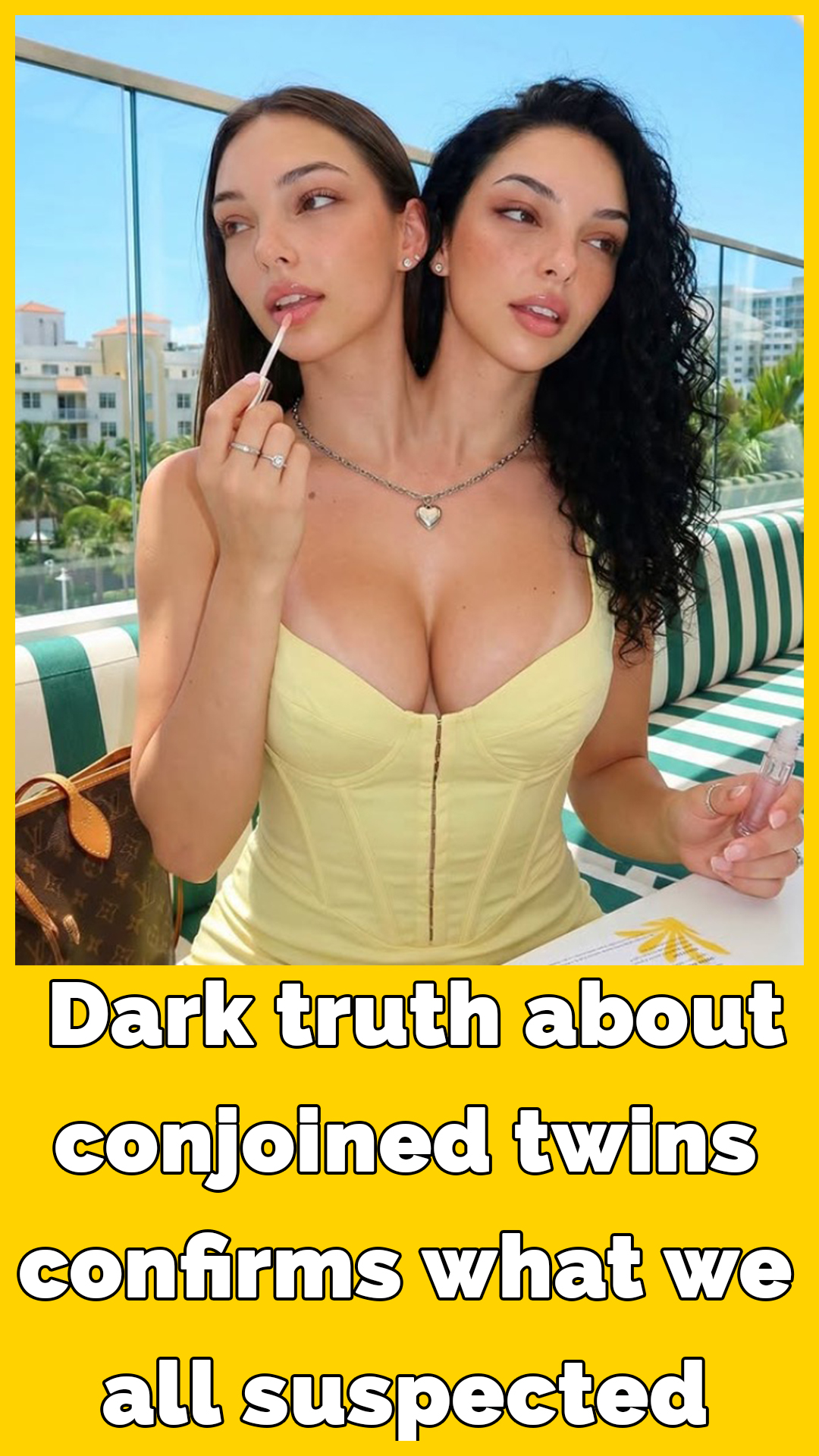
A glamorous Instagram account claiming to feature conjoined twins has exploded to nearly 290,000 followers in just weeks—but digital forensics experts say the entire persona is an elaborate artificial intelligence creation designed to exploit curiosity, compassion, and the viral nature of difference.
Since mid-December 2025, an Instagram account operating under the handle @itsvaleriaandcamila has captivated social media audiences with glossy photographs purporting to show two young women joined at the base of the neck, sharing a single body while each maintaining her own head. The twins, who claim to be 25-year-old Floridians named Valeria and Camila, present themselves living what appears to be an impossibly glamorous lifestyle—posing in revealing bikinis, dining at upscale restaurants with equally photogenic friends, and answering intimate questions about dating, jealousy, and navigating life in a shared body.
The account’s meteoric rise seemed to reflect society’s growing fascination with authentic representation and lived experiences of people with rare medical conditions. Yet beneath the surface of this feel-good narrative lies something far more troubling: multiple experts in digital forensics and artificial intelligence have now confirmed that Valeria and Camila don’t exist at all. They are, instead, sophisticated AI-generated avatars—digital phantoms crafted to maximize engagement in an attention economy that increasingly blurs the line between reality and fabrication.
The Medical Reality Behind the Fantasy
To understand why this deception matters, it’s essential first to grasp what the account purports to represent. Valeria and Camila claim to have dicephalic parapagus—an extraordinarily rare form of conjoined twinning characterized by two heads positioned side-by-side on a single torso. Medical literature documents that this condition occurs in approximately one in every 50,000 to 200,000 births, representing only about eleven percent of all conjoined twin cases.
The reality of dicephalic parapagus twins is medically complex and often heartbreaking. Most infants born with this condition are either stillborn or die shortly after birth due to severe organ complications. Those who survive face extraordinary medical challenges throughout their lives. Real-life examples like Abby and Brittany Hensel—American twins born in Minnesota in 1990 who went on to become teachers—demonstrate that survival to adulthood is possible, but extraordinarily rare and accompanied by significant physical adaptations.
Medical case reports consistently describe dicephalic parapagus twins as having varying degrees of organ duplication—sometimes two hearts, sometimes one; varying numbers of limbs; and complex shared internal anatomy that makes separation surgery extremely dangerous or impossible. Survivors typically exhibit visible asymmetries, medical scars, and physical characteristics that reflect the biological reality of their condition.
This medical context makes the Instagram account’s presentation all the more suspect. Valeria and Camila appear impossibly proportioned—with perfectly symmetrical features, flawless skin, and a body that, as one expert noted, “defies biological structure.” There are no visible scars from the multiple surgical interventions the twins claim to have undergone. Their supposed friends display the same airbrushed perfection. Everything looks precisely calibrated for maximum visual appeal.
Expert Analysis: The Technical Giveaways
Andrew Hulbert, an AI prompt engineer who specializes in ChatGPT and artificial intelligence applications in business, was among the first experts to publicly confirm what many observers had already suspected. Speaking with the Daily Mail, Hulbert was unequivocal: “As someone who consults on the use of AI in business, processes and marketing, these images are clearly AI-generated.”
Hulbert pointed to several technical indicators that reveal the account’s artificial nature. “The narrative is created to hype potential interaction,” he explained. “It’s the perfect story of the perfect person to give the perfect result of engagement which is what the user is aiming for.” He noted that the images represent “the personification of what the media thinks beauty is and there isn’t a flaw amongst any of them. This is unrealistic, certainly as more characters are added. It’s improbable to have three ‘perfect’ people with flawless bodies in the same photo.”
The expert highlighted specific visual markers that betray AI generation: inconsistencies in body proportions across different photographs, identical tanning with no variation in skin tone, and suspiciously perfect symmetry. “AI is not quite there yet with perfect consistency,” Hulbert warned. “So look out for the shape of the ears, the number of fingers, or marks/scars appearing in the exactly same place, everything.”
Jake Green, a digital forensics specialist with over ten years of experience and Technical Lead at Envista Forensics, provided additional confirmation during an appearance on NewsNation’s “Jesse Weber Live.” Green, who has assisted over twenty law enforcement agencies with more than 1,300 digital examinations throughout his career, outlined the forensic methodology used to identify AI-generated content.
“So really, the top three things that we look for is frame-to-frame changes, especially things for videos,” Green explained. “As that frame moves to the next, we see lots of different changes throughout the scene, throughout the lighting.” He emphasized examining “minutiae within the face” as a critical indicator. “We look for freckles. We look for eyelashes, teeth, earrings, hair subtly changing. We look for all of those tiny little pieces. Then we look for really some of the easiest ones that we can spot… shadows and reflections.”
Green’s assessment of the motivation behind such accounts was direct: “So I think that’s really at the end of the day… it’s about… the financial gain of the person who’s in control, whether it’s a real person or it’s some IT guy sitting in the closet. It’s about the money.”
Independent analysis by News.com.au found “multiple positive markers of AI generation” in the account’s images, including anatomical impossibilities and biological structures that simply don’t align with medical reality for actual dicephalic parapagus twins.
The Crowd-Sourced Investigation
While experts provided professional confirmation, ordinary Instagram users had been voicing skepticism from the account’s earliest posts. The comments sections beneath Valeria and Camila’s photographs read like a real-time crowd-sourced investigation, with users pointing out increasingly specific irregularities.
“AI!!!! None of this is real,” wrote one commenter who had clearly scrutinized the images closely. Another issued a direct challenge: “If it’s real go live stream? I know you won’t… guys this is fake.” The request for a live stream—which would be difficult or impossible to fake with current AI technology—became a recurring demand from skeptical followers.
Some users demonstrated impressive attention to detail in their detective work. “Upon zooming in on the menu. Can confirm it’s AI,” noted one observer who had examined the background of a photograph supposedly taken at an ice cream shop. The signage in the background, when closely inspected, consisted of nonsensical text—a common failing of AI image generators that struggle with reproducing coherent written language.
Other commenters drew on their knowledge of real conjoined twins to question the account’s authenticity. “Marks of AI written all over it… lol conjoined twins in the history of the world have at least some sort of bodily defects ain’t nothing that perfect,” one Facebook user noted accurately. Another added: “Total AI can’t believe you guys are falling for it… these type of siamese twins usually have bone alterations as a result of their unequal development and adaptations.”
The observation about medical reality proved particularly damning. Real dicephalic parapagus twins typically display visible asymmetries and physical adaptations resulting from their shared anatomy. The fact that Valeria and Camila appear perfectly proportioned and symmetrical is, in itself, a biological impossibility that betrays their artificial origin.
Yet despite mounting evidence and expert confirmation, the account’s follower count continued to climb. Some users appeared genuinely invested in the twins’ fabricated narrative, leaving comments celebrating their “beauty” and “bravery.” Others seemed aware of the deception but unbothered by it—perhaps drawn to the aesthetic presentation regardless of its authenticity.
The Twins’ Unconvincing Defense
Faced with growing skepticism, the account’s operators attempted to quell doubts through Instagram Stories—a feature that allows users to post temporary content that disappears after 24 hours. In one video response, the twins directly addressed accusations: “We move, we talk, we’re obviously not AI.”
The statement was meant to serve as definitive proof of authenticity, yet it only raised further questions. The video itself displayed many of the same telltale signs experts had identified in the static images. Movement in AI-generated video remains one of the technology’s weakest points, with unnatural transitions and inconsistencies that betray artificial generation.
The account has also built an elaborate backstory designed to add layers of supposed authenticity. In response to questions about their medical history, the twins explained: “Our spines were dangerously fused together, so we had to undergo several surgeries and operations throughout our lives after birth, and that’s why we have these beautiful scars.” The narrative is compelling—emphasizing resilience and medical survival—yet the promised scars are conspicuously absent from any of their photographs.
The twins have fielded questions about virtually every aspect of their purported lives. When asked about romantic relationships, they claimed: “We both date as one and both have to be physically and emotionally attracted to the same guy. We tried dating separately and that did not go well.” Regarding jealousy, Valeria supposedly responded: “People ask about jealousy but, honestly, having two perspectives means we communicate better.” Camila allegedly added: “Exactly. It builds so much trust knowing we’re always on the same page.”
These responses read like carefully crafted content designed to maximize engagement and emotional investment. They touch on universal human concerns—love, jealousy, communication, trust—while framing them through the lens of an extraordinary medical condition. The result is content that feels simultaneously exotic and relatable, perfectly calibrated to generate shares, saves, and comments that boost the account’s algorithmic visibility.
The Broader Implications of AI Deception
The Valeria and Camila phenomenon represents more than just another instance of social media deception. It illuminates several troubling trends at the intersection of artificial intelligence, social media economics, and authentic representation.
First, there’s the exploitation of medical difference for profit. Dicephalic parapagus is a real medical condition that affects real people and families. By creating AI-generated avatars that claim to represent this condition while conforming to impossible beauty standards, the account’s creators are essentially weaponizing disability and medical difference as content strategy. This raises profound ethical questions about the commercialization of bodies and experiences that fall outside normative expectations.
Real conjoined twins and their families navigate extraordinary medical, social, and psychological challenges throughout their lives. Abby and Brittany Hensel, for example, have carefully managed their public presence, sharing aspects of their lives on their own terms while maintaining appropriate boundaries. The AI-generated version strips away all nuance, complexity, and authentic lived experience, replacing it with an algorithm-optimized fantasy designed purely for engagement metrics.
Second, the case highlights the increasingly sophisticated nature of AI deception. Just a few years ago, AI-generated images were relatively easy to identify through obvious visual artifacts—distorted hands, impossible anatomy, incoherent backgrounds. Current generation AI tools have become significantly more convincing, requiring expert analysis to definitively identify artificial generation. As one observer noted: “The fact that so many people can’t tell whether these ‘influencers’ are real or AI shows how blurred reality has become online.”
This technological sophistication creates a troubling dynamic where ordinary social media users lack the tools and expertise to distinguish authentic representation from algorithmic fabrication. The traditional indicators of trustworthiness—photographic evidence, consistent narrative, apparent personality—can now be manufactured with relative ease by anyone with access to AI generation tools.
Third, there’s the question of disclosure. Many AI influencers and virtual models operate openly, clearly identifying themselves as digital creations and leaning into the novelty of their artificial nature. Lil Miquela, for instance, has built a massive following while being transparent about her status as a computer-generated character. The Valeria and Camila account, by contrast, makes no such disclosure. There’s no pinned explanation, no biographical statement acknowledging AI generation—only vague denials when directly challenged.
This lack of transparency transforms the account from an interesting experiment in AI-generated content into something closer to outright deception. Followers who believe they’re supporting real people with a rare medical condition are instead unknowingly contributing to someone’s monetization scheme. The emotional investment viewers make in Valeria and Camila’s supposed struggles and triumphs is being exploited for algorithmic engagement that translates into actual financial returns through advertising, sponsorships, or other monetization channels.
The Money Machine Behind the Mask
Digital forensics expert Jake Green’s assessment cuts to the heart of what makes this deception particularly troubling: “It’s about the money.” Instagram accounts with hundreds of thousands of followers represent significant earning potential through multiple revenue streams.
Influencer marketing has become a multi-billion dollar industry, with brands paying substantial sums for access to engaged audiences. An account with nearly 300,000 followers could potentially command thousands of dollars for sponsored posts, depending on engagement rates and audience demographics. Even without direct brand partnerships, Instagram’s built-in monetization tools allow accounts with sufficient followers to earn revenue through content.
The anonymous nature of the account’s operation compounds the ethical problems. Unlike real influencers who stake their personal reputation on their content, the operators behind Valeria and Camila remain completely hidden. If the deception is exposed and the account loses credibility, they can simply delete it and create new AI-generated personas to start the cycle again. The financial incentives are high, while the personal accountability is effectively zero.
This dynamic represents a fundamental shift in how deception operates in the digital age. Traditional catfishing—where individuals misrepresent themselves online—at least involved a real person whose actions could potentially be traced. AI-generated personas introduce a new level of abstraction, where the “person” followers believe they’re connecting with literally doesn’t exist in any form.
What This Means for the Future of Social Media
The Valeria and Camila case offers a glimpse into a future where the line between real and artificial becomes increasingly difficult to discern. As AI generation tools become more sophisticated and accessible, we can expect to see more accounts following similar patterns—creating compelling narratives around algorithmically-optimized personas designed purely for engagement and monetization.
Social media platforms face mounting pressure to develop robust systems for identifying and labeling AI-generated content. Some have begun implementing policies requiring disclosure when accounts represent digital rather than human creators, but enforcement remains inconsistent. The technical challenge of reliably detecting AI-generated content at scale, combined with the constantly evolving capabilities of generation tools, creates an ongoing cat-and-mouse game between platforms and deceptive account operators.
For individual users, the situation demands a higher level of skepticism and media literacy. The traditional assumption that photographs represent reality has been progressively eroded by editing tools, filters, and now AI generation. Developing the ability to critically evaluate content—looking for the telltale signs experts identify, questioning narratives that seem too perfect, demanding transparency about content creation—becomes an essential skill for navigating social media.
The case also raises questions about our collective relationship with authenticity in digital spaces. Why are we drawn to these accounts? What need do they fulfill that makes hundreds of thousands of people follow obviously suspicious personas? Part of the answer may lie in the parasocial relationships social media enables—the illusion of connection with people we’ll never meet in person. AI-generated accounts exploit this dynamic, offering carefully crafted content designed to maximize emotional engagement while requiring nothing of the followers beyond their attention and clicks.
The Ethics of Digital Difference
Perhaps most troublingly, the Valeria and Camila account commodifies disability and medical difference in ways that raise profound ethical concerns. The account essentially treats dicephalic parapagus as an aesthetic choice—something to be deployed for its visual interest and engagement potential rather than as a lived medical reality with profound implications for those who actually experience it.
This approach to representing difference is particularly insidious because it masquerades as inclusion while actually undermining it. On the surface, an account showing conjoined twins living glamorous lives might seem positive—challenging stereotypes and showcasing capability despite medical difference. But by making that representation entirely artificial and algorithmically optimized, the account actually reinforces impossible standards while exploiting the curiosity and compassion that real people with rare conditions navigate daily.
Real families dealing with conjoined twins face extraordinary challenges: complex medical decisions, invasive public curiosity, financial strain from ongoing medical care, and the constant work of advocating for their children’s dignity and agency. Creating AI-generated twins as content fodder trivializes these realities, reducing them to engagement metrics and follower counts.
The lack of consent inherent in this representation adds another ethical dimension. Real people with dicephalic parapagus have no say in how their condition is being represented through these AI-generated accounts. They cannot control the narrative, correct misconceptions, or demand that their medical reality not be exploited for someone else’s profit. The AI avatars exist in a consent vacuum, appearing to offer representation while actually speaking over the people they purport to represent.
Conclusion: Reality in the Age of Algorithmic Deception
The story of Valeria and Camila represents a cautionary tale for the social media age. What began as a seemingly heartwarming account showcasing two young women navigating life with a rare medical condition has been exposed as an elaborate AI-generated deception designed purely for engagement and monetization.
Multiple experts in digital forensics and artificial intelligence have confirmed through technical analysis what many observers suspected from visual inspection: the twins don’t exist. They are sophisticated digital fabrications, crafted to exploit curiosity, compassion, and the viral nature of difference for financial gain.
The case illuminates the growing sophistication of AI deception, the ethical problems of exploiting disability for content, and the challenges platforms and users face in navigating an increasingly artificial social media landscape. As AI generation tools continue to improve, distinguishing authentic representation from algorithmic fabrication will only become more difficult.
For now, the Valeria and Camila account continues to operate, its follower count climbing despite expert exposure of the deception. Some followers appear genuinely convinced of the twins’ authenticity. Others seem aware of the artificial nature but remain engaged regardless—perhaps drawn to the aesthetic presentation or content regardless of its origin.
The persistence of the account even after exposure speaks to a fundamental shift in how we relate to digital content. In an age where reality has become increasingly optional, where perfect images can be generated on demand, and where engagement metrics trump authenticity, perhaps the question isn’t whether Valeria and Camila are real. Perhaps the question is: does it matter? And if the answer is yes—as it should be—what are we willing to do to protect the boundaries between authentic human experience and algorithmic fabrication designed purely to capture our attention and extract our engagement?
