
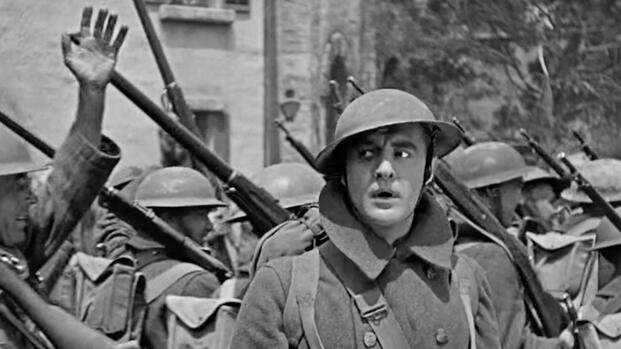
Decades before Hollywood began openly talking about PTSD or military transition, a nearly forgotten silent film had already captured the emotional reality of coming home from war.

When The Big Parade premiered in 1925, it wasn’t treated like an ordinary movie. It became a national event. Millions of Americans went to see it, including World War I veterans who were still struggling to make sense of life after combat. Newspapers across the country gave it front-page attention, recognizing that this film was doing something rare: showing war and its aftermath without filters or easy heroics.
Directed by King Vidor and shaped by Marine veteran Laurence Stallings—who lost a leg at the Battle of Belleau Wood—the film follows Jim Apperson, an average young American who enlists in 1917, fights in France, and returns home permanently changed. The story itself is simple, but the emotional weight was unlike anything audiences had seen before.

At a time when most studios avoided the uncomfortable realities of war, The Big Parade focused on the ordinary soldier rather than generals or grand strategy. It showed boredom, fear, friendship, humor, sudden loss, and the slow emotional unraveling caused by prolonged combat. Stallings’ firsthand experience kept the story grounded in authenticity, avoiding both propaganda and melodrama.

The battle scenes were massive for their time, staged with the help of thousands of U.S. Army troops, vehicles, and aircraft. Yet what stayed with viewers wasn’t just the scale of combat—it was the quiet human moments. Jim’s transformation from carefree young man to wounded veteran unfolded gradually, making the final homecoming scenes especially painful.
