Yellowstone Officials Decide Against Action After Bison Attack Injures Grandfather
The topic of Yellowstone Officials Decide Against raises many questions. Authorities at Yellowstone National Park have concluded their review of a violent encounter involving a wild bison and a visiting grandfather. The decision means the animal involved in the July 10 incident will remain free and face no repercussions.
The attack occurred at Bridge Bay Campground, a popular spot within the sprawling national park. Carl McDaniel, a 65-year-old visitor, was walking alongside his 13-year-old grandson when a bull bison charged unexpectedly. The ensuing collision left McDaniel with severe injuries, including a broken femur.
No Management Action Taken Against the Animal
Park officials have officially closed the case regarding the bison’s fate. In a formal statement, Yellowstone National Park confirmed that “no management action” would be taken against the wild animal. This decision explicitly rules out euthanization, meaning the bison will continue to roam the park without interference from wildlife managers.
The confirmation came in response to inquiries about the incident and the potential consequences for the animal. The park’s stance aligns with its standard protocols for wildlife encounters where the animal is acting on natural instincts. The decision underscores the park’s commitment to preserving its wildlife population without punitive measures for defensive or aggressive behavior.
Details of the Terrifying Encounter
The dramatic sequence of events was captured on video by photographer Mike MacLeod, who happened to be nearby. The footage quickly gained traction across social media platforms, drawing widespread attention to the severity of the attack.
The video shows McDaniel and his grandson taking photographs of the bison from a distance. The animal appeared calm and stationary in the moments leading up to the charge. Without warning, the bull bison launched itself toward the pair, covering the distance in a matter of seconds.
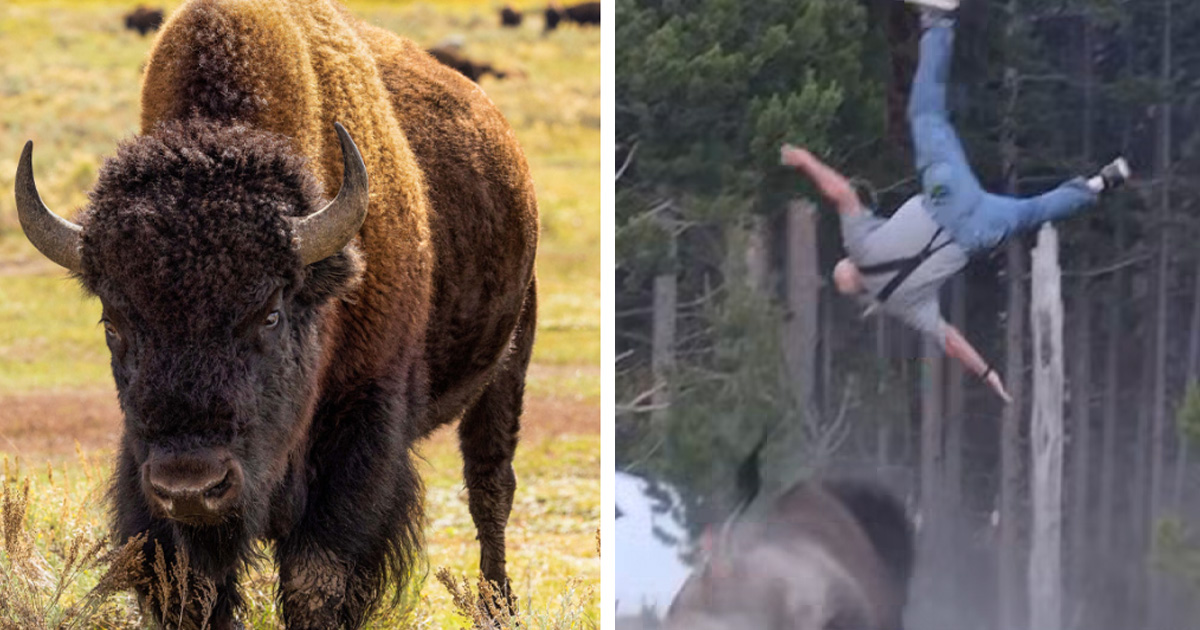
The grandson managed to evade the charging animal, escaping without physical harm. However, McDaniel was not as fortunate. The bison struck him with one of its horns, sending him airborne. Witnesses reported that McDaniel was thrown approximately eight feet into the air before crashing to the ground.
Grandfather’s Account of the Attack
Speaking about the ordeal, McDaniel described the moments leading up to the attack. He noted that the bison had not displayed any signs of aggression when they first spotted it. The pair was about a hundred yards away from the animal when they decided to take photographs.
“He was not aggressive; he was not having problems and we took some pictures and decided to walk on,” McDaniel recounted. The sudden charge caught them completely off guard, leaving little time to react.
In the chaos, McDaniel made a split-second decision to protect his grandson. “There was little time to decide what to do. At that point, he was within 100 yards; he could be to us in seconds, so I told my grandson to run in one direction and I went the other to try and draw him away,” he explained.
Despite the terrifying situation, McDaniel expressed a surprising sense of gratitude. After being knocked to the ground and left immobile, the bison stood directly over him. “When I was on the ground immobile, unable to move, he was right on top of me. He could have stomped on me, he could have gored me, he could have done almost anything to take my life, and he did not do so,” McDaniel said.
Injuries and Recovery
The impact of the attack left McDaniel with a broken femur in four places near his hip. The severity of the fracture required surgical intervention. McDaniel underwent surgery on Sunday, two days after the incident.
Remarkably, McDaniel’s recovery has been swift. He was able to stand just one day after undergoing surgery. He anticipates a period of physical therapy that will likely last several days. Despite the traumatic nature of the event, McDaniel acknowledged that the outcome could have been far worse. “It was not as catastrophic as it could have been,” he noted.
Photographer’s Response to the Attack
Mike MacLeod, the photographer who captured the attack on video, provided his own account of the harrowing moments. He revealed that he made the difficult decision to stop recording when he sensed the situation was about to escalate further.
“I was really afraid he was going to gore the guy on the ground, so I stopped videotaping and ran at the bison, yelled loud, and was trying to be as big and intimidating as possible,” MacLeod said. His quick thinking and loud approach may have contributed to the bison retreating from the scene.
After the bison ran off, bystanders rushed to provide assistance to McDaniel. Emergency crews were dispatched to the location and arrived promptly to take over the situation.
Emergency Response and Aftermath
The National Park Service detailed the response to the incident in a statement. “Park emergency medical personnel responded and transported him to a nearby hospital,” the statement read. The swift action of the medical team ensured that McDaniel received timely care for his injuries.
The incident has reignited discussions about wildlife safety in national parks. Yellowstone National Park is home to a large population of bison, which are powerful animals capable of running at high speeds and inflicting serious harm.
Yellowstone Officials Decide Against: Park Officials Reinforce Safety Guidelines
In the wake of the attack, park officials have reiterated the importance of maintaining a safe distance from wildlife. Visitors are reminded to stay at least 25 yards away from bison at all times. This distance is intended to provide a buffer zone that reduces the risk of unexpected encounters.
Officials also offered additional guidance for those who find themselves in a dangerous situation. “If the bison follows you, spray bear spray as you are moving away, and seek cover behind nearby trees or cars,” they advised. This practical advice is designed to help visitors protect themselves if a bison becomes aggressive.
The reminder serves as a critical lesson for all park visitors. While the bison in this case faced no consequences, the physical and emotional toll on the victim was significant. The park’s guidelines are in place to prevent such incidents from occurring in the first place.
McDaniel’s experience is a stark reminder of the unpredictable nature of wild animals. Even when an animal appears calm, it can react suddenly and violently. The encounter also highlights the importance of vigilance and preparedness when visiting natural habitats.
As McDaniel continues his recovery, the video of the attack remains a powerful cautionary tale. It demonstrates the raw power of bison and the importance of respecting their space. The park’s decision not to take action against the animal reflects its broader policy of allowing wildlife to exist without human interference.
For visitors planning trips to Yellowstone, the incident serves as a powerful reminder to follow all safety guidelines. Maintaining distance, staying alert, and knowing how to respond in an emergency are essential practices for anyone exploring the park. The bison population at Yellowstone is a treasured part of the ecosystem, and coexistence requires mutual respect and caution.
