Reba McEntire at 69: From Ranch Life and Rodeo Roots to Country Music Royalty
The topic of From Ranch Life raises many questions. Reba McEntire has been a fixture in country music for decades, her voice and personality as recognizable today as they were when she first burst onto the scene. Now celebrating her 69th birthday, the artist continues to be a beloved figure, with a career that spans music, television, and film. Her journey, however, began far from the glitz of Nashville, rooted in the demanding and dusty landscapes of an Oklahoma ranch.
The path to stardom was not a simple one. It was paved with long hours of physical labor, the weight of family expectations, and a deep connection to a specific way of life. Her story is one of resilience, shaped by both profound tragedy and incredible triumph, making her one of the most enduring and respected entertainers of her generation.
An Unconventional Childhood on an Oklahoma Ranch
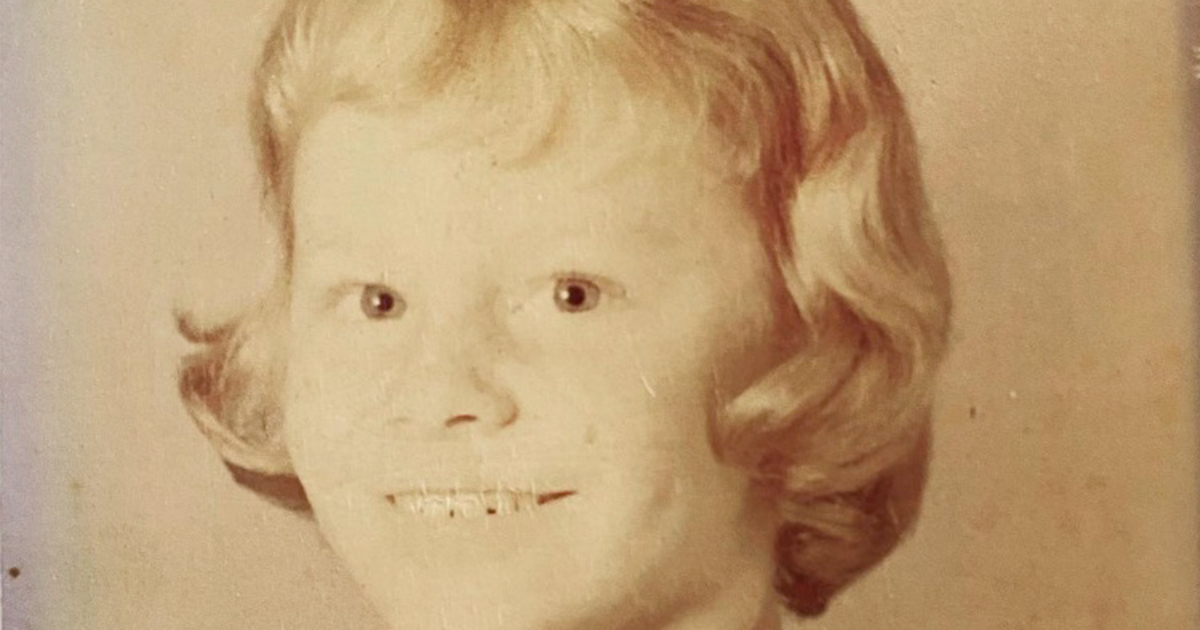
Born in McAlester, Oklahoma, in 1955, McEntire spent her formative years on her family’s sprawling 8,000-acre ranch in the small community of Chockie, located in Atoka County. This was not a childhood of leisure; it was one defined by hard work and a strict western ethos. From a very young age, she was expected to contribute to the daily operations of the ranch.
Remarkably, at just five years old, she was already learning to drive her father’s truck through cattle-filled fields. Since she was too small to reach the pedals, her father, Clark McEntire, would prop her up with a heavy feed sack, shift the truck into its lowest gear, and let her steer. This was not a playful one-time occurrence but a regular part of her upbringing, instilling in her a sense of responsibility and capability from an early age.
The family was steeped in rodeo tradition. Her grandfather, John Wesley McEntire, was a world-champion steer roper in 1934, and her father followed in those footsteps, winning the same title three times. This heritage was a source of pride and a defining element of their identity. The values of the rodeo circuit—discipline, grit, and self-reliance—were central to the McEntire household.
A Father’s Tough Love and a Mother’s Encouragement
Clark McEntire was a product of his time, an old-school parent who believed in showing love through high expectations rather than open affection. He was not one for hugs or verbal declarations of love. Instead, he taught his children the importance of hard work and perseverance. Reba later reflected on this, noting in her autobiography that she once regretted her father never saying he loved them.
The family lived in a modest gray house with only one bathroom for the six of them. It was a simple life, far removed from any notion of glamour. Reba described their circumstances as being far from wealthy, living on rocky, mountainous terrain that was just enough to support a few steers. Despite the tough exterior of her father, his influence was profound, and she would later acknowledge inheriting his drive and determination.
While her father was stoic, her mother, Jacqueline, was the warm and nurturing presence in the family. Jacqueline had once harbored her own dreams of becoming a country singer but had instead dedicated her life to teaching and raising her family. She channeled her passion for music into her children, teaching them to sing in harmony during long car rides to rodeo events. These moments became the foundation of Reba’s musical education.
Discovering a Powerful Voice
Reba often credited her mother for teaching her to sing, but the sheer power of her voice came from her father. Clark had to shout across vast fields to call cattle, and that booming vocal strength was passed down to his daughter. Reba acknowledged that she had always been loud, and when she sang with her siblings, her voice would always carry over theirs.
Her talent was evident early on. In first grade, she captivated her classmates with a solo performance of “Away in a Manger” at a school Christmas pageant. By fifth grade, she had won first place in a 4-H club competition singing “My Sweet Little Alice Blue Gown.” These early performances were clear indicators of the path she would eventually take, showcasing a natural gift for commanding an audience.
Music was not her only interest. She was an active child, playing basketball and running track. She also learned to play piano and guitar and trained as a barrel racer, staying connected to her rodeo roots. Her life was a balanced mix of athletic pursuits, musical development, and ranch responsibilities.
The Singing McEntires and Early Musical Steps
By high school, her musical ambitions had become a family project. Along with her siblings, Pake and Susie, she formed a trio known as The Singing McEntires. Their mother was a constant source of feedback, often using her cooking spatula to point out who was singing off-key and demanding they correct their parts. These family practice sessions were a testament to their mother’s dedication and musical ear.
The group gained local popularity, performing at small-town events and dances. They eventually evolved into a band that played in dance halls and bars in Oklahoma City. Reba later joked that they were just kids barely out of puberty, staying up until sunrise after shows. The experience was invaluable, providing them with a taste of performing for live audiences.
In 1971, the siblings released a single called “The Ballad of John McEntire,” a tribute to their grandfather. Although it was only distributed regionally, it was a significant milestone in Reba’s early career. However, as the siblings grew older, their paths began to diverge, and the band dissolved after her brother graduated from high school.
A Fateful Performance at the National Finals Rodeo
After graduating from Kiowa High School in 1973, Reba attended Southeastern Oklahoma State University, where she studied elementary education with a minor in music. She continued to balance her studies with work on the family ranch, demonstrating the same work ethic she had learned as a child. Then, in 1974, a pivotal opportunity arose.
Her father encouraged her to sing “The Star-Spangled Banner” at the National Finals Rodeo in Oklahoma City. With some help from a family friend, she secured the gig. Nervous but determined, she delivered a performance that would change her life. In the audience that night was country music legend Red Steagall, who was immediately struck by her powerful voice.
Steagall invited Reba and her family to a gathering after the rodeo, where she performed an a cappella version of Dolly Parton’s “Joshua.” Her mother saw this as a chance to get all her children into the music business, but Steagall was clear that he could only take one. He chose Reba, recognizing that she had something special and different from the others.
The Journey to Nashville
In March 1975, Reba and her mother set out for Nashville to record a demo tape. The trip was not without its doubts, and Reba made several excuses to delay it. Finally, her mother pulled the car over and gave her a choice: they could turn back if she didn’t want to go, but she confessed she was living all her dreams through her daughter. Those words were a turning point, filling Reba with a new sense of purpose and determination.
Upon arriving in Nashville, they recorded the demo, and it eventually found its way to Glenn Keener, a producer at PolyGram/Mercury Records. Keener was impressed but faced a difficult decision, as he was only allowed to sign one female artist. Holding two demo tapes in his hands, he ultimately chose Reba’s, a moment that would launch her professional career.
Her early years in the industry were a struggle, with several singles failing to chart well. However, in 1978, she achieved her first top 20 hit with “I’d Really Love to See You Tonight.” The real breakthrough came in 1984 when she signed with MCA Records. Her album My Kind of Country was a critical and commercial success, earning her the Female Vocalist of the Year award and cementing her status as a leading figure in the genre.
Overcoming Tragedy and Building a Legacy
As her career soared, McEntire’s touring schedule became more demanding, and she and her band began traveling by private plane. In March 1991, tragedy struck when a plane crash claimed the lives of eight members of her band and two pilots. The loss was devastating, and she channeled her grief into her album For My Broken Heart, which she dedicated to those who were lost.
Despite the immense pain, she persevered, and her career continued to flourish throughout the 1990s. She expanded into acting, starring in her own television series and releasing the hit song “I’m a Survivor,” which became an anthem of resilience. After a brief hiatus, she returned to music in 2003 with Room to Breathe, which produced another number-one hit.
Her father passed away in 2014, and she honored him with a heartfelt music video for “Just Like Them Horses.” She had previously written a song called “Daddy” as a tribute to him in 1979. The loss of her father was another profound moment in her life, but she continued to draw strength from the lessons he taught her about drive and perseverance.
From Ranch Life: A Full-Circle Moment and a Lasting Impact
The most difficult challenge came in March 2020 when her mother, Jacqueline, passed away from cancer. During a period of introspection, Reba considered quitting music altogether, telling her sister she had only ever done it for their mother. Her sister assured her the passion would return, and indeed, it did.
In 2023, Reba gave back to her roots by partnering with the Choctaw Nation to open Reba’s Place, a restaurant and gathering spot in her hometown of Atoka. The venture is about more than business; it is a way to create jobs and revitalize the community that shaped her. The Chief of the Choctaw Nation noted that Reba’s identity is tied to faith, family, and culture.
Her journey came full circle in 2024 when she performed “The Star-Spangled Banner” at Super Bowl LVIII. It was a poignant reminder of her first major performance at the National Finals Rodeo fifty years earlier. From a small rodeo in Oklahoma to the world’s biggest stage, her story is a testament to the power of passion and hard work.
With 24 number-one hits and over 90 million albums sold, Reba McEntire has secured her place in the history of country music. Her life, marked by incredible highs and devastating lows, serves as an inspiration, proving that humble beginnings can lead to extraordinary achievements.
